


Fast, Same Day Response


Fast, Same Day Response



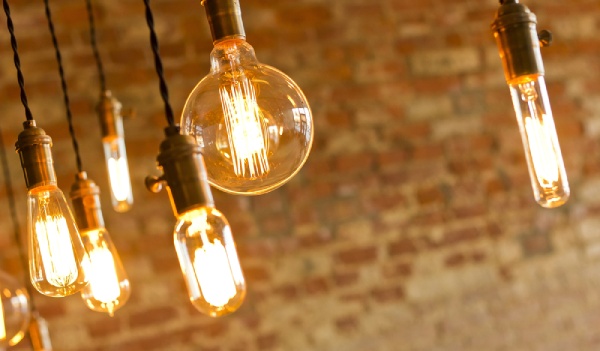
You’ve probably seen brightness listed in lumens on LED downlights, globes, pendants, and security lighting and wondered, what is a lumen exactly?
Well, in this guide, we will explain everything you need to know so you can confidently choose the right brightness before booking lighting installation services. Let’s break it down.
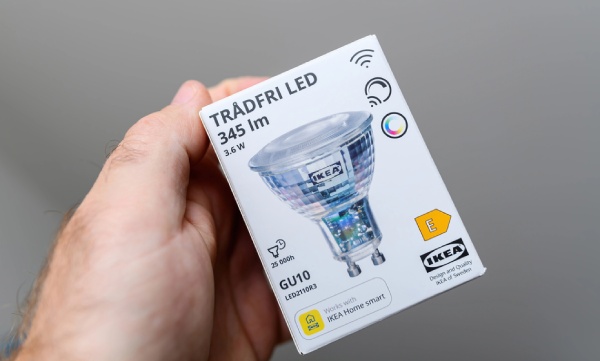
A lumen (lm) measures the amount of visible light a source produces. In simple terms, it tells you how bright a light appears to the human eye.
The higher the lumens, the brighter the light. Lower lumens mean a softer, dimmer glow.
What makes lumens interesting is that they measure perceived brightness, not electrical power. Our eyes react more strongly to certain wavelengths, such as green, than others, such as red.
Because of that, one lumen of green light requires less energy than one lumen of red light to appear equally bright.
You’ll spot lumens printed on bulb boxes, downlight packaging, and online product pages across all types of lights. In fact, most manufacturers now list lumens as the main brightness indicator.
In the previous section, we explained that lumens measure visible brightness. Now let’s compare that to watts, because these two numbers get mixed up all the time.
For years, brightness was judged by wattage. A 60-watt globe meant a certain glow in the living room.
A 100-watt bulb meant something brighter. That worked in the incandescent era because higher energy use roughly matched higher light output.
But wattage measures electricity consumption, not brightness. It tells you how much energy a bulb draws from your power supply.
That’s what appears on your electricity bill. A 60-watt incandescent used 60 units of electrical power every hour it ran.
Brightness, on the other hand, relates to visible light output. And modern LED technology changed the game.
An LED can produce the same brightness as an old 60-watt incandescent while using only a fraction of the energy.
So two bulbs can deliver similar light levels, even though their energy use looks completely different. That’s why checking lumens instead of relying on watts makes far more sense today.
Up to this point, we’ve talked about total brightness coming from a light source and clarified what is a lumen.
In this section, let’s zoom in on another number you might see in lighting plans or technical specs.
One measures the total visible light emitted in all directions. The other measures how much of that light actually reaches a surface.
Think of it this way: imagine a bulb producing 1000 units of visible light. That number describes the overall output.
Now place that same bulb above a one-square-metre table. If all 1000 units land evenly on that table, the surface receives 1000 units of illumination.
Spread that same light across a larger area, and the brightness on each square metre drops. The total output stays the same, but the intensity on the surface changes.
So here’s the practical takeaway for you: one figure tells you how bright the source is, while the other tells you how bright a space or surface appears.
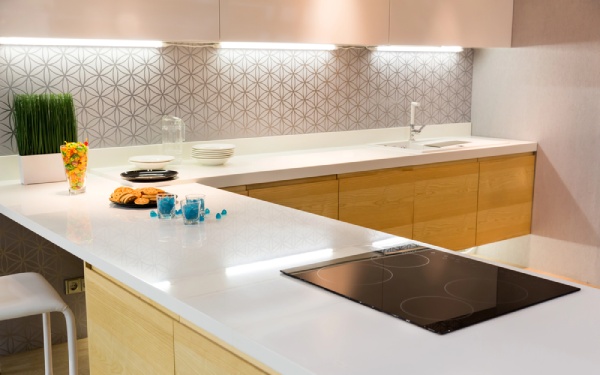
Choosing the right brightness is not about eyeballing a number on the box. It requires calculating based on room size, purpose, and layout.
Lighting recommendations are typically expressed in lux, which measures how much light reaches a surface. Once you know the recommended level, you can calculate the total output required for your space.
Here are general illumination guidelines by room type:
To see how this works in practice, consider a 20 m² living room where you want around 200 lux. Multiply 20 by 200 and you get 4,000 lumens in total.
The said output can be distributed across multiple downlights, pendants, or wall lights depending on your design.
Below is a quick reference guide for total output targets in common spaces:
| Room | Recommended Total Output | Lighting Notes |
| Kitchen | 4,000 to 6,000 lumens | Cool white light over benchtops and work areas |
| Bedroom | 1,500 to 3,000 lumens | Warm light with dimmable fittings for relaxation |
| Bathroom | 1,200 to 2,000 lumens at mirror | Neutral white for accurate reflection |
| Corridor | 300 to 600 lumens per fitting | Warm light for comfortable transition areas |
These figures provide a strong starting point. However, final requirements can shift based on wall colours, ceiling height, and fitting type.
Here are the key factors that change brightness in real conditions:
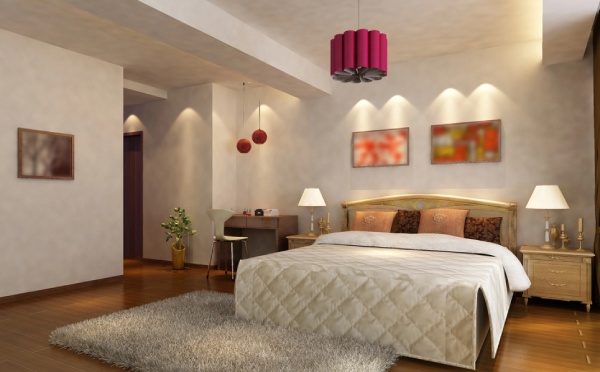
Beam angle determines how concentrated or spread out light appears.
A narrow spotlight channels light into a tight, intense beam. Meanwhile, a floodlight disperses the same lumens across a wider area, which reduces intensity at any single point.
Key differences to consider:
A 500 lumen spotlight aimed at artwork can appear far brighter than a 500 lumen bulb lighting an entire wall.
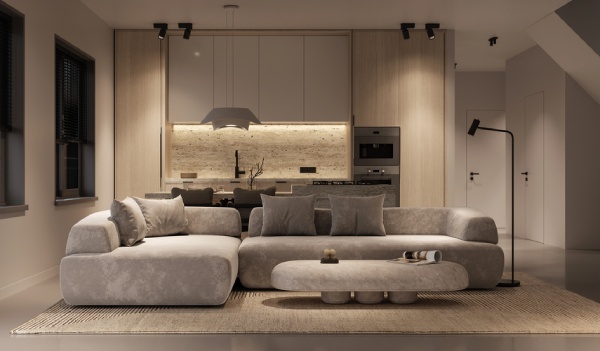
Light color affects how bright a room appears to the human eye.
Cooler tones in the 5000 to 6000 Kelvin range appear brighter and more energizing. Warmer tones between 2700 and 3000 Kelvin create a softer atmosphere, even when the lumen rating remains identical.
This difference occurs because cooler light stimulates visual perception more strongly.
In workspaces and kitchens, higher Kelvin values enhance alertness and visibility. In bedrooms and lounges, warmer tones support relaxation without harshness.

The surrounding environment can change brightness dramatically.
Dark walls absorb light, reducing reflection and lowering overall illumination. Light colored walls and ceilings reflect more light, amplifying brightness throughout the room.
Room size can also influence perception. Larger spaces require greater total output to maintain consistent illumination levels across the entire area.
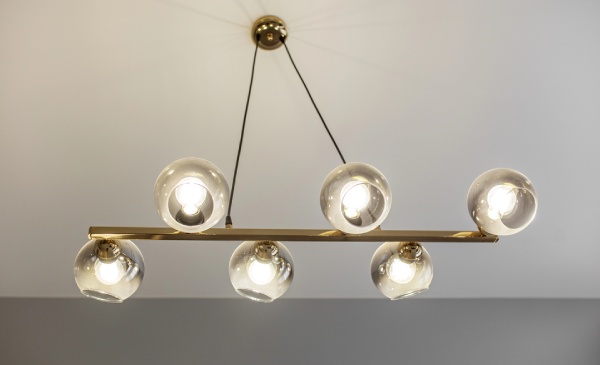
Move a light source farther from a surface and the brightness drops sharply.
Light spreads across a wider area as distance increases, so the intensity on any single point decreases. Such a principle is known as the inverse square law.
Moreover, a ceiling light placed high above the floor delivers far less illumination to a desk compared to a focused task lamp placed close to it.
In practical terms, positioning can outweigh raw output. A 400 lumen reading lamp placed 40 cm above a book can outperform a 1,000 lumen ceiling fixture several meters away.

Thinking about upgrading your lighting?
No need to worry, our team can assess your current setup and design a practical upgrade plan that supports long-term savings.
Along the way, we also consider natural light, room purpose, colour temperature, and lumen output to build a layered lighting layout that suits both task areas and ambient zones.
Importantly, every installation complies with Australian safety standards, including correct clearances and insulation requirements.
Our electricians are fully qualified and licensed in NSW, so quality workmanship and compliance go hand in hand.
Ready to make the switch? Get a free quote today and contact our licensed electricians to discuss your project.
Let’s tackle common FAQs about lumens to make lighting specs easier to understand.
Not necessarily. Higher lumens mean more light output, but too much brightness can create glare, visual discomfort, and unnecessary energy use.
Instead of chasing the highest number, match the lumen level to the room’s purpose.
For most living rooms and bedrooms, somewhere between 800 and 2,000 lumens provides comfortable general lighting.
However, kitchens and work areas typically require 4,000 to 6,000 lumens in total, especially across countertops and task zones.
As a practical guide, aim for around 100 to 150 lumens per square metre for ambient lighting.
LEDs convert far more electricity into visible light instead of heat, which means they produce more lumens per watt than traditional incandescent or CFL bulbs.
On top of that, many LEDs use cooler colour temperatures. The slightly bluer tone appears more intense to the human eye, even when the wattage is lower.
The result is stronger perceived brightness without the extra power consumption.
Lighting decisions influence productivity, comfort, and overall atmosphere in every space. Getting the lumen levels right gives you better visibility, smarter energy use, and a more polished finish across every room.For expert advice and professional installation, Sydney Expert Electrician is ready to bring your lighting plans to life. Call us today!
What our customers in Sydney say about us
Marcie McConville

David and Luca started working as soon as they checked what work needed to be done. They were hard working, very professional and delightful young men. I am very happy with the work that was done and highly recommend them.
David Coorey
Best electricians i have ever dealt with, well presented, knowledgeable found and fix our fault in a timely manner and at an extremely reasonable price.
Zaryab khan
With more than ten years of expertise, dependable and effective. Consumers value their competitive pricing and timely, amiable service.